Children Learn More From Who We Are Than What We Say
Children absorb far more than instructions. This article explores how everyday adult behaviour shapes confidence, emotional security, empathy, and lifelong learning.
EARLY CHILDHOOD
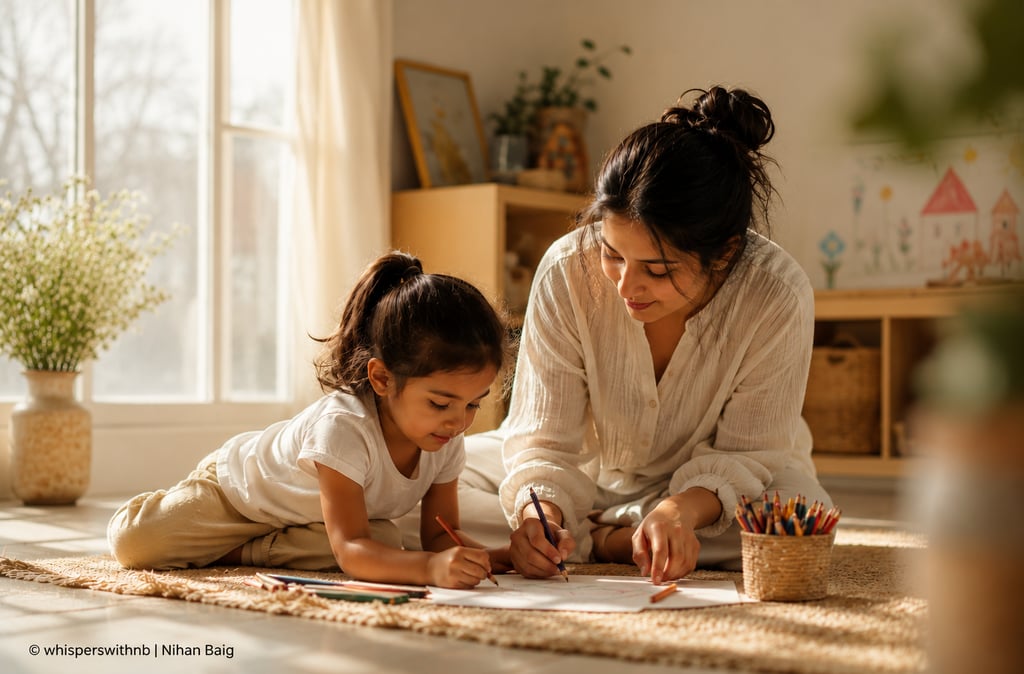
There is a whispered truth about childhood that often goes unnoticed. Children spend far less time listening to our words than they do watching our lives. They notice the way we greet people, how we respond when plans fall apart, the patience we show when someone makes a mistake, and even the moments when we think they are too busy playing to be paying attention. Long before children understand our advice, they are learning from our example.
As adults, we naturally want to teach. We remind children to be kind, to tell the truth, to be patient, to apologise, and to respect others. These conversations matter. Words help children understand what is expected of them. Yet words become far more meaningful when they are reflected in everyday actions. A child who regularly witnesses kindness begins to understand kindness. A child who sees honesty practised learns that truth is something to live, not simply something to say.
Children are remarkable observers. They notice our tone before they understand our explanations. They remember how we made them feel long after they have forgotten the exact words we used. The way we handle disappointment, manage frustration, celebrate success, or admit our own mistakes quietly becomes part of their understanding of how people move through life.
This is not about becoming a perfect parent, educator, or caregiver. Perfection is neither realistic nor necessary. In fact, some of the most valuable lessons children learn come from watching adults handle imperfection with humility. When we lose our patience and later apologise sincerely, children learn that relationships can be repaired. When we acknowledge that we do not know everything, they learn that learning never truly ends. When we ask for help, they discover that strength is not found in pretending to have all the answers.
Many of the values we hope children will carry into adulthood are absorbed in the ordinary moments that rarely make the family photo album. They are built while waiting patiently in a queue, speaking respectfully to a shop assistant, thanking someone for their help, listening without interrupting, or showing compassion to a stranger. These everyday interactions silently shape a child's understanding of respect, empathy, gratitude, and humanity.
It can be tempting to believe that one conversation will change a child's behaviour. More often, it is the consistency of what they experience day after day that leaves the deepest impression. Children grow within patterns. They learn what love feels like by experiencing it repeatedly. They learn emotional safety through predictable care. They learn resilience by watching trusted adults face life's challenges with courage, flexibility, and hope.
This can feel like a great responsibility, but it is also an incredible opportunity. Every day offers countless moments to model the kind of person we hope children become. Not through grand speeches or perfectly planned lessons, but through ordinary choices that quietly speak for themselves.
Perhaps the greatest gift we can offer children is not a collection of perfect words, but a life that reflects the values we hope to pass on. A life that shows kindness even when it is inconvenient. Patience when emotions are high. Respect when opinions differ. Gratitude in ordinary moments. Curiosity instead of judgment. Compassion instead of criticism.
Children may not remember every rule they were taught. They may not recall every conversation or every reminder. But they often remember how the important adults in their lives made others feel. They remember whether home felt safe, whether mistakes were met with understanding, whether love remained present during difficult moments, and whether forgiveness was something they experienced as well as heard about.
Perhaps that is why the greatest lessons are rarely spoken aloud. They are silently lived, one ordinary day at a time. And in those ordinary days, children are learning far more from who we are than from what we say.